












NEWS
Stainless Steel Fermentation Tanks for Beer and wine
Stainless steel fermentation tanks for beer and wine are essential for breweries and wineries seeking consistent quality, hygiene, and efficient production. Shandong Weike Machinery Equipment Co., Ltd delivers expertly designed stainless steel solutions for global beverage producers, combining advanced manufacturing, reliable performance, and long-term service support. Whether you need precise fermentation control or durable customized vessels, our equipment helps elevate both product quality and operational efficiency.
For most breweries and wineries, the real question is not whether stainless steel is useful, but how to choose tanks that improve flavor stability, simplify cleaning, and support future growth. The right tank affects fermentation control, sanitation, operating cost, and the consistency customers expect from every batch.
Beer and wine producers also face a practical buying challenge. A tank may look similar on paper, yet differences in material grade, weld quality, jacket design, fittings, and after-sales support can directly influence production efficiency and long-term maintenance risk.
Why stainless steel tanks have become the standard for beer and wine production
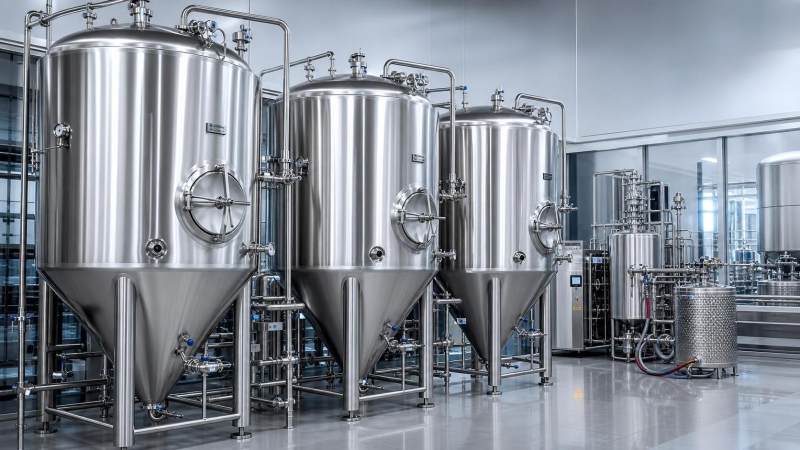
Stainless steel fermentation tanks are widely preferred because they combine hygiene, durability, and process control in one system. Compared with older materials, stainless steel is easier to sanitize, less reactive, and far better suited to repeatable commercial production.
For breweries, that means better yeast management, stable temperature regulation, and lower contamination risk during fermentation. For wineries, it means preserving fruit character, maintaining freshness, and running controlled fermentations without unwanted flavor pickup from vessel surfaces.
High-quality stainless steel also stands up well to acids, cleaning chemicals, pressure changes, and frequent use. This matters for growing producers that need equipment to perform reliably across many production cycles without introducing avoidable downtime or inconsistent results.
What buyers care about most when selecting fermentation tanks
Decision-makers usually focus on four issues first: product quality, cleaning efficiency, production flexibility, and equipment lifespan. If a tank performs well in these areas, it contributes directly to better operations rather than becoming a maintenance burden.
Temperature control is often the first technical requirement to review. Fermentation is highly sensitive to heat, and poorly designed cooling jackets can lead to uneven control, stressed yeast, and flavor variation that is difficult to correct later.
Material choice matters as well. Tanks built in 304 or 316 stainless steel are common because they offer strong corrosion resistance and a hygienic surface. Smooth, polished interiors further reduce residue buildup and make cleaning more effective after each batch.
Buyers should also check structural details that affect daily use. Features such as sample valves, manways, RTD probes, rotary spray balls, butterfly valves, and properly designed outlet assemblies all improve inspection, cleaning, and transfer efficiency.
How tank design influences beer and wine quality
The design of a fermentation tank shapes more than production convenience. It has a direct effect on oxygen exposure, thermal stability, pressure handling, sediment management, and the overall consistency of the finished beverage.
In beer production, conical designs can help with yeast collection and clearer separation of solids. Controlled cooling keeps fermentation within the desired range, helping brewers protect aroma, mouthfeel, and attenuation from batch to batch.
In wine production, careful vessel design supports cleaner fermentation and more predictable outcomes, especially for white wines, fruit wines, and styles where freshness and aromatic precision are important. Stainless steel gives winemakers a neutral environment that does not mask varietal character.
Details such as fully welded cladding, properly sealed manholes, and pressure-relief components contribute to safer and more stable operation. These are not cosmetic choices; they are part of maintaining product integrity and operational confidence.
What to evaluate beyond the tank itself
Many buyers underestimate the importance of installation support, commissioning, and post-sale service. A well-made tank still needs proper integration into the production line, especially where cooling, cleaning, transfer, and automation systems must work together.
That is why manufacturer capability matters. Shandong Weike Machinery Equipment Co., Ltd operates a factory of more than 15,000 square meters and focuses on the design, manufacture, installation, and commissioning of stainless steel vessels for brewing, winemaking, and beverage applications worldwide.
For global beverage producers, that broader experience is valuable because fermentation tanks rarely operate in isolation. They often connect with storage vessels, blending equipment, CIP systems, pumps, and process controls that must be planned as a complete working setup.
Long-term service is another practical concern. Reliable after-sales support helps producers reduce downtime, resolve technical issues faster, and protect equipment value over time, especially in export projects where response quality strongly affects operational continuity.
When customized stainless steel solutions make more sense
Standard tank sizes are useful, but many breweries and wineries benefit from tailored configurations. Ceiling height, production volume, beverage style, cooling requirements, and cleaning workflow all influence whether a standard design is truly the best investment.
Customization may include working volume, jacket layout, top and side access, valve arrangements, bottom structure, probe locations, and polishing level. These choices can improve operator efficiency and reduce unnecessary handling steps during busy production periods.
Producers expanding into ready-to-drink beverages, cider, kombucha, or spirits may also need adjacent process equipment. In those cases, integrated stainless steel systems can create a more efficient line than sourcing isolated vessels from multiple suppliers.
For example, some beverage operations pair fermentation assets with alcohol mixing tanks when they need homogeneous blending, dilution control, and stable product uniformity across alcohol-based liquids. This is especially relevant for diversified producers managing multiple beverage categories.
Key specifications that deserve closer attention
When comparing suppliers, buyers should look past headline capacity and ask for detailed specifications. Plate thickness, weld finish, jacket design, valve quality, instrumentation, and sanitary construction standards often reveal more about actual performance than marketing claims do.
Useful options may include conical centric tops, top manhole covers, side rectangular manways, sloping flat bottoms, cooling jackets, sample valves, and CIP rotary spray balls. Together, these features support better cleaning access, monitoring, transfer control, and process reliability.
Capacity planning should also reflect growth. Depending on the application, stainless steel vessel sizes may range from compact units to systems above 10,000 liters. Choosing only for current output can create an avoidable upgrade problem sooner than expected.
Compliance matters for regulated buyers as well. Equipment aligned with standards such as FDA and EU 10/2011 can simplify procurement decisions for businesses supplying international markets or operating under stricter hygiene and material requirements.
How to make a sound investment decision
The best tank is not simply the cheapest or the largest. It is the one that fits your beverage style, production method, sanitation expectations, space constraints, and long-term expansion plan while maintaining consistent product quality.
Before ordering, buyers should confirm intended beverage type, target batch size, utility conditions, cooling needs, cleaning method, and preferred fittings. They should also review fabrication quality and ask what commissioning and technical support are included after delivery.
For breweries and wineries, the value of a stainless steel fermentation tank comes from repeatable performance. Better process control means fewer quality deviations, more predictable production scheduling, and stronger confidence when scaling output for commercial markets.
In practical terms, stainless steel fermentation tanks for beer and wine are a strategic production asset. When designed and supported correctly, they help producers protect flavor, improve hygiene, lower operational risk, and build a more efficient beverage business for the long term.