





NEWS
Are red wine fermentation tanks worth stainless steel costs?
For business evaluators, the question is not simply whether stainless steel is expensive, but whether red wine fermentation tanks can protect product quality, reduce operating risk, and deliver long-term value. Compared with lower-cost alternatives, stainless steel tanks offer durability, hygienic performance, precise temperature control, and easier cleaning—factors that directly affect wine consistency and production efficiency. For wineries planning capacity expansion or equipment upgrades, understanding the true cost-benefit balance is essential before making an investment decision.
What makes red wine fermentation tanks a business investment, not just a purchase?
Red wine production is sensitive to temperature, oxygen exposure, sanitation, cap management, and batch traceability. Equipment choice directly influences these operating variables.
For evaluators comparing red wine fermentation tanks, the real issue is lifecycle performance. A low initial price can become costly if cleaning time, leakage risk, or batch variation increases.
- Product consistency: stable fermentation conditions help maintain aroma, color extraction, tannin balance, and repeatable wine profiles across batches.
- Operational control: stainless steel vessels support temperature regulation, sampling, drainage, and cleaning procedures with fewer process interruptions.
- Risk reduction: hygienic surfaces and welded construction reduce contamination points compared with porous or difficult-to-clean alternatives.
- Asset value: durable tanks can serve multiple vintages and different beverage applications when properly specified and maintained.
In business terms, red wine fermentation tanks should be evaluated as production assets tied to yield, labor efficiency, compliance readiness, and brand reliability.
How do stainless steel tanks compare with lower-cost alternatives?
A fair comparison should consider purchase price, sanitation, temperature control, maintenance, service life, and suitability for commercial beverage environments.
The stainless steel option often looks expensive at quotation stage. However, its value becomes clearer when production continuity and avoidable losses are included.
Which winery scenarios justify stainless steel costs faster?
Not every winery has the same payback logic. Red wine fermentation tanks create the strongest value where space, consistency, and labor efficiency matter.
Capacity expansion without expanding the building
Urban micro-wineries and small-to-medium wineries often face floor-space constraints. Square stainless tanks can increase usable volume within existing production rooms.
Premium batches requiring tighter process control
When brand positioning depends on stable flavor and color, controlled fermentation temperature becomes more than a technical preference. It becomes commercial protection.
Multi-beverage facilities needing flexible vessels
Facilities producing wine, cider, kombucha, juice, soda water, or coffee beverages benefit from hygienic stainless equipment designed for repeated cleaning cycles.
- Choose jacketed red wine fermentation tanks when ambient temperature changes could affect fermentation speed or aroma development.
- Prioritize side doors and drain assemblies when pomace handling, cleaning access, and wine recovery are frequent concerns.
- Consider movable designs with forklift pockets or casters when production layouts change seasonally.
What parameters should evaluators check before approving a tank order?
Business evaluators should convert production goals into measurable specifications. Capacity, material grade, fittings, and temperature range must match the winery’s actual process.
For a compact layout, the 1000L square wine tanks option can be evaluated for wineries needing stainless construction, cooling support, and high floor-space efficiency.
How should total cost be calculated beyond the stainless steel price?
The price of red wine fermentation tanks should be assessed with operating cost categories. This prevents a low-cost quote from hiding later expenses.
A stainless steel tank with cooling jacket, sample valve, thermometer, liquid level gauge, butterfly valves, and drain assembly may reduce hidden process costs.
What design features matter most in red wine fermentation tanks?
Evaluators do not need to become winemakers, but they should understand which design features affect production control and maintenance requirements.
Square tank layout and space utilization
Square fermentation tanks can provide 20–30% more fermentation capacity in the same area compared with cylindrical tanks, depending on cellar layout.
Cooling jacket and heat distribution
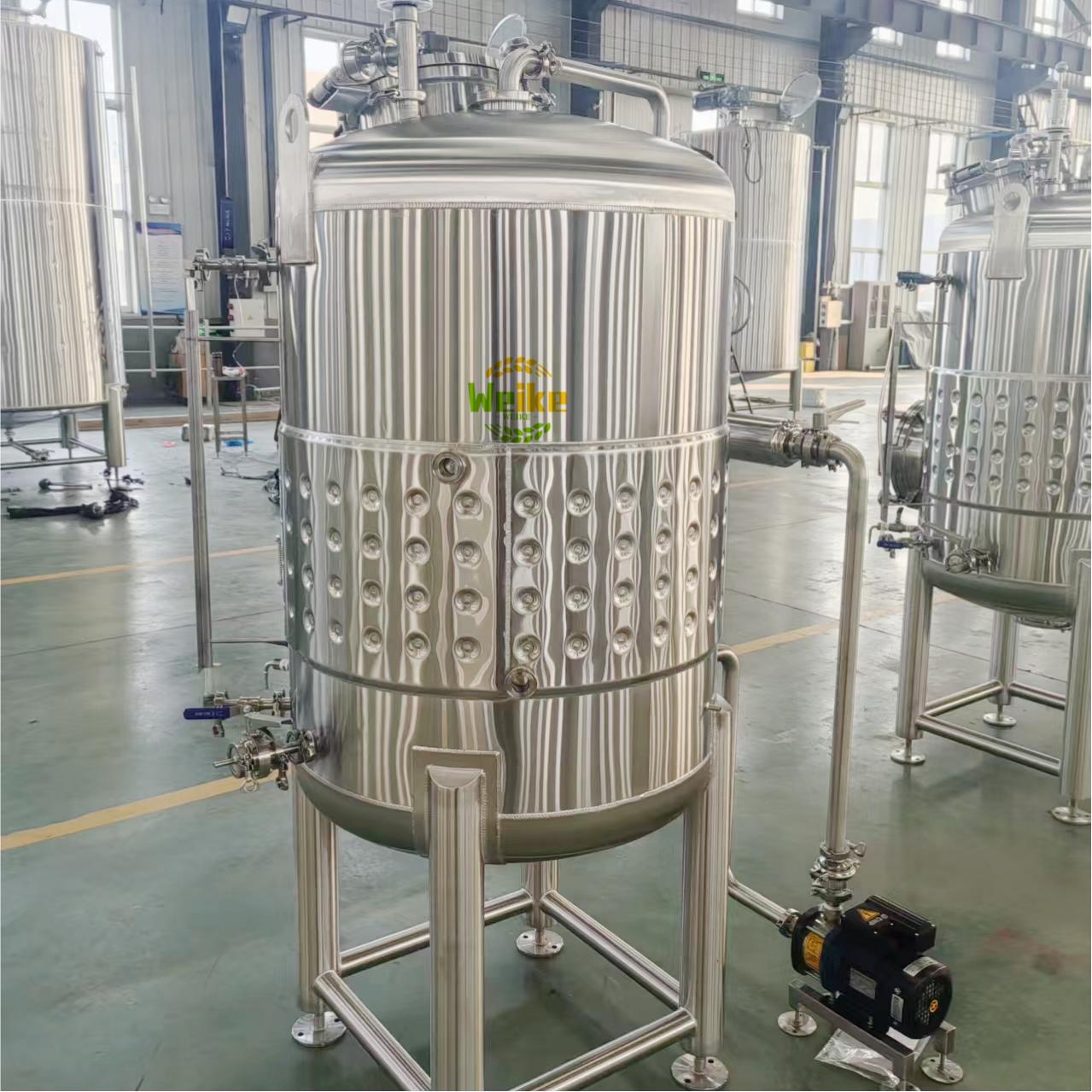
Flat, consistent surface area can support efficient cooling or heating. This is useful when red wine fermentation tanks must hold 22–28°C reliably.
Access, drainage, and cleaning
A side round door, rounded corners, bottom cone, and central drain make cleaning easier and help improve wine recovery after fermentation.
- Check whether valve sizes and fittings match existing hoses, pumps, and cellar operating habits.
- Confirm whether floating lids and interchangeable ports support both variable batch volume and future process changes.
- Review whether tank height allows safe manual work, cleaning access, and installation in existing doorways.
Common misconceptions when evaluating stainless steel wine tanks
Many procurement mistakes occur because red wine fermentation tanks are compared only by capacity and material grade, not by process suitability.
Misconception 1: All 304 stainless tanks perform the same
Material matters, but welding quality, polishing, fittings, drainage, jacket design, and inspection procedures also affect daily sanitation and service life.
Misconception 2: Cheaper tanks save money immediately
Lower purchase cost may be offset by longer cleaning time, limited cooling control, difficult repairs, or higher risk of inconsistent batches.
Misconception 3: Customization always delays the project
Reasonable customization can prevent layout problems. Confirming height, ports, valves, and mobility early often improves delivery coordination.
FAQ for procurement teams comparing red wine fermentation tanks
These questions help evaluators align technical specifications with budget approval, facility planning, and production objectives before signing a purchase order.
Are red wine fermentation tanks suitable for small wineries?
Yes, especially when the winery needs controlled batches, easier cleaning, and efficient use of limited cellar space. A 1000L class tank is often practical.
Should we choose 304 or 316 stainless steel?
304 is widely used in beverage vessels. 316 may be considered when cleaning chemistry or corrosion exposure requires stronger resistance.
What should be confirmed before requesting a quotation?
Confirm capacity, dimensions, fermentation temperature control, ports, valves, cleaning method, installation space, destination requirements, and preferred delivery schedule.
Can one tank design support more than red wine?
With proper specification and cleaning procedures, stainless vessels can serve wine, cider, kombucha, juice, and other beverage applications in mixed facilities.
Why choose Shandong Weike Machinery for consultation and supply?
Shandong Weike Machinery Equipment Co., Ltd is located in Jinan, Shandong province, with a factory of over 15,000 square meters.
The company designs, manufactures, installs, and commissions stainless steel vessels for winemaking, brewing, food processing, and beverage production worldwide.
Its product scope includes wine tanks, beer equipment, mixing tanks, beverage tanks, alcohol tanks, and storage tanks for diverse process requirements.
- Consult on tank capacity, 1000L or 1500L selection, and practical layout planning for new or upgraded winery rooms.
- Discuss cooling jacket requirements, valve configuration, sampling access, floating lid design, and cleaning expectations.
- Review custom height, width, mobility options, installation conditions, delivery timing, and documentation needs before quotation.
- Ask about after-sale service arrangements, spare parts communication, commissioning support, and long-term equipment maintenance planning.
If you are evaluating red wine fermentation tanks for expansion, replacement, or a new beverage project, request a specification review before comparing prices.
A clear technical discussion can help align budget, production goals, certification expectations, and delivery schedule with a tank configuration that fits your facility.