





NEWS
What limits beer fermentation tanks for brewery capacity?
When planning brewery expansion, understanding what limits beer fermentation tanks for brewery capacity is essential for avoiding expensive production bottlenecks.
Fermentation volume is not determined by tank size alone. Yeast performance, cooling efficiency, tank turnaround, cleaning schedules, and production planning all matter.
For breweries researching equipment options, identifying these constraints early helps improve batch consistency, reduce downtime, and support smarter stainless steel tank investment decisions.
What Is the Real Search Intent Behind This Question?
Most people asking this question are not looking for a simple tank volume definition. They want to know why production capacity feels limited.
A brewery may have enough nominal liters on paper, yet still struggle to meet demand during seasonal peaks or product launches.
The real concern is whether existing or planned beer fermentation tanks for brewery operations can support reliable output without compromising quality.
For information researchers, the most useful answer connects equipment design, process control, batch timing, and operational discipline into one practical capacity picture.
Why Tank Volume Alone Does Not Define Brewery Capacity
A 5,000-liter fermenter does not automatically produce 5,000 liters of finished beer every few days. Fermentation is a time-based biological process.
Actual capacity depends on how long wort remains in the tank, how much headspace is required, and how efficiently beer moves through downstream stages.
If a lager needs several weeks of fermentation and conditioning, the same tank supports fewer annual turns than a fast-fermenting ale.
Breweries should calculate capacity using usable volume, fermentation days, cleaning time, transfer time, and packaging readiness rather than tank size alone.
Fermentation Time Is Usually the First Capacity Limiter
The most common constraint is tank occupation time. Every additional day beer remains in a fermenter reduces the number of annual batches.
Recipe type, yeast strain, original gravity, temperature profile, and desired flavor stability all influence how quickly a beer can be released.
Trying to shorten fermentation without process control can create diacetyl, under-attenuation, haze problems, or inconsistent flavor from batch to batch.
Instead of forcing faster turns, breweries should analyze which products occupy tanks longest and whether dedicated tanks are needed for slow styles.
Cooling Capacity Can Restrict Fermentation Performance
Fermentation generates heat, and larger batches require reliable cooling to maintain yeast health and target flavor profiles during active fermentation.
If glycol systems, cooling jackets, insulation, or temperature probes are undersized, tanks may reach volume capacity but fail to maintain process stability.
Poor cooling can delay fermentation, increase ester formation, stress yeast, and cause inconsistent results between tanks of different sizes.
When selecting beer fermentation tanks for brewery expansion, cooling surface area and control accuracy should be reviewed as carefully as total volume.
Yeast Health and Pitching Strategy Affect Tank Utilization
Yeast is a living production asset. Under-pitching, poor oxygenation, contamination, or weak yeast management can extend fermentation time significantly.
Even high-quality stainless steel fermenters cannot compensate for unhealthy yeast or inconsistent propagation and harvesting practices.
Breweries should monitor viability, cell count, attenuation curves, pH, and sensory results to understand whether yeast performance limits capacity.
Good tank design supports this work through sanitary fittings, sample valves, reliable temperature monitoring, and easy cleaning between yeast cycles.
Cleaning, CIP, and Turnaround Time Are Often Underestimated
Many capacity calculations ignore the time needed for draining, rinsing, caustic cleaning, acid washing, sanitizing, inspection, and preparation for filling.
When tanks are difficult to clean, have poor drainage, or require excessive manual labor, actual brewery output declines quickly.
A well-designed CIP system reduces downtime, improves sanitation consistency, and protects beer quality as production volume grows.
For growing breweries, one extra day of cleaning and preparation per batch can represent a major hidden capacity loss over a year.
Tank Geometry and Headspace Influence Usable Volume
Fermentation tanks require appropriate headspace for krausen, pressure management, and safe operation. Therefore, nominal volume differs from usable working volume.
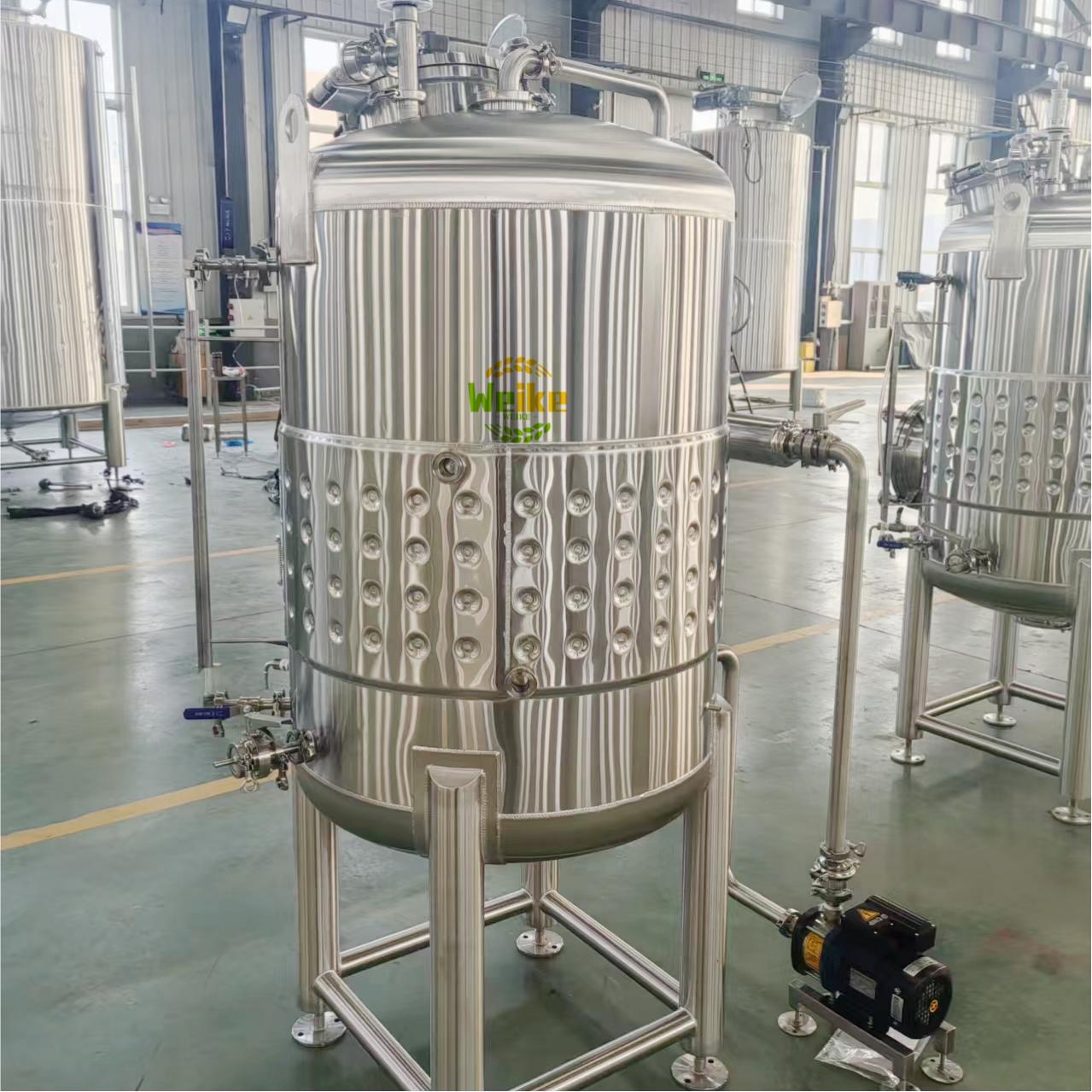
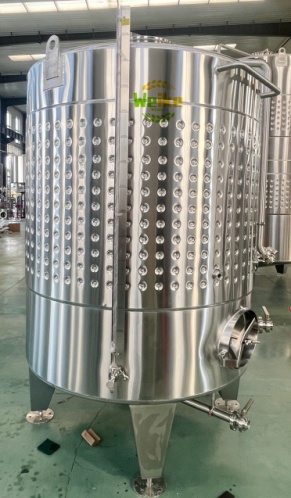
Cylindrical-conical tanks, cone angle, height-to-diameter ratio, jacket placement, and manway design all influence fermentation behavior and cleaning efficiency.
Very tall tanks may save floor space, but they can affect hydrostatic pressure, yeast behavior, and access requirements.
The best design balances usable volume, product style, cellar layout, sanitation needs, and future expansion rather than maximizing liters alone.
Packaging and Bright Tank Availability Can Limit Fermenter Capacity
Sometimes fermenters appear to be the problem, but the true bottleneck sits after fermentation in filtration, bright tanks, or packaging.
If finished beer cannot move out of fermenters because bright tanks are full, fermentation tanks become temporary storage vessels.
This reduces tank turns and creates scheduling pressure, especially when multiple beers reach maturity at the same time.
A practical capacity review should map the full flow from brewhouse to fermenter, conditioning, bright beer storage, packaging, and cold storage.
Brewhouse Batch Size Must Match Fermenter Strategy
Fermenter capacity also depends on how the brewhouse fills tanks. Some breweries use single brews, while others stack multiple brews.
If the brewhouse is too small for planned fermenters, filling large tanks may take too long and complicate yeast pitching schedules.
If the brewhouse is too large for available fermentation space, wort production waits for empty tanks, wasting brewhouse potential.
Capacity planning should align brewhouse volume, daily brew frequency, fermentation duration, and cellar tank mix into one coordinated model.
Product Mix Creates Different Capacity Pressures
A brewery producing mostly pale ales faces different constraints from one producing lagers, high-gravity beers, sours, or specialty seasonal products.
High-gravity beers need longer fermentation or maturation, while heavily dry-hopped beers may require extra contact time and tank operations.
Seasonal demand can also concentrate pressure on a few flagship products, making average annual capacity calculations misleading.
Researchers should evaluate real production plans, not just theoretical maximum output, before comparing different beer fermentation tank configurations.
Stainless Steel Quality and Fabrication Affect Long-Term Capacity
Tank reliability directly affects capacity. Poor welds, weak polishing, unstable fittings, or inadequate pressure protection increase maintenance and contamination risks.
Food-grade stainless steel construction, sanitary welding, proper insulation, accurate probes, and durable valves support stable long-term brewing operations.
Manufacturers with design, fabrication, installation, and commissioning experience can help breweries avoid layout and utility mistakes before production begins.
Shandong Weike Machinery Equipment Co.,Ltd manufactures stainless steel vessels for beer, wine, cider, kombucha, soda, juice, alcohol, and storage applications.
How to Estimate Practical Fermentation Capacity
A simple starting formula is usable fermenter volume multiplied by annual tank turns, then adjusted for losses, downtime, and product mix.
Annual tank turns depend on fermentation days, conditioning days, dry hopping time, cleaning time, and waiting time before packaging.
For example, a beer occupying a tank for fourteen days creates fewer annual batches than one released in eight days.
This calculation should be repeated by beer style, then compared against sales forecasts, peak demand, and realistic packaging schedules.
When Larger Tanks Help, and When They Do Not
Larger tanks can reduce labor per liter, improve space efficiency, and support higher-volume flagship beer production.
However, larger tanks do not solve weak cooling, limited packaging, poor scheduling, or inadequate yeast management.
They may also reduce flexibility if the brewery produces many small-batch or experimental beers with different fermentation requirements.
The right choice is often a balanced cellar with different tank sizes, allowing both efficient core production and flexible specialty brewing.
Learning from Adjacent Beverage and Spirit Tank Design
Capacity thinking is not limited to beer. Beverage and alcohol producers also evaluate storage volume, temperature control, sanitation, and safety systems.
For large distillery storage or blending, equipment such as whiskey vodka brandy alcholo tanks may use heavy-duty stainless steel construction and advanced controls.
Although beer fermentation has different biological requirements, the broader lesson is similar: tank capacity must match process behavior and operational flow.
Features such as cooling jackets, sample valves, temperature probes, pressure relief, and CIP-friendly design help support consistent industrial-scale production.
Questions to Ask Before Buying Fermentation Tanks
Before purchasing, breweries should ask how many batches each tank can realistically complete per month under normal production conditions.
They should also check whether utilities, glycol capacity, drainage, floor loading, and cellar space can support the selected tank sizes.
Other key questions include cleaning method, pressure rating, automation level, access for maintenance, and compatibility with future expansion plans.
A professional supplier should help translate sales goals and brewing methods into a tank layout, not simply recommend the largest vessel.
Conclusion: Capacity Is a System, Not a Single Tank Number
What limits beer fermentation tanks for brewery capacity is rarely one factor. The constraint usually comes from several connected process conditions.
Tank volume matters, but fermentation time, cooling power, yeast health, CIP speed, packaging flow, and product mix determine practical output.
For breweries researching equipment, the safest approach is to calculate usable capacity from real recipes, schedules, utilities, and operational habits.
With the right stainless steel tank design and a realistic production plan, breweries can expand capacity while protecting consistency, efficiency, and beer quality.