












NEWS
Why does foam build up in a beverage blending tank?
Foam builds up in a beverage blending tank when gas is introduced into the liquid faster than it can escape, and ingredients stabilize the resulting bubbles. Agitation, splashing, air leaks, dissolved carbon dioxide and the recipe itself can all contribute. The most useful first step is to identify when the foam appears: during filling, mixing, ingredient addition or transfer. Each points toward a different cause.
Some surface foam is normal, especially with protein-rich or carbonated products. It becomes a production problem when it takes up working volume, interferes with level readings, carries product into vents or makes it difficult to transfer a consistent blend.
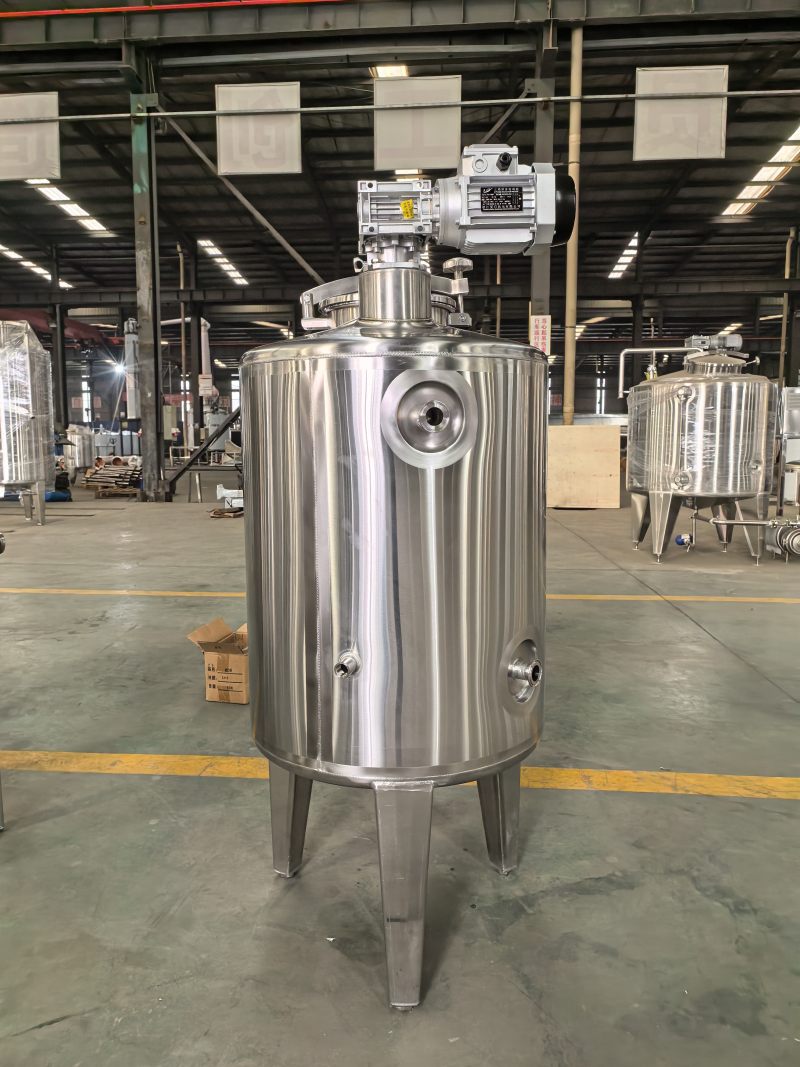
Start by locating the stage that creates foam
Watch the batch as it moves through each operation, using the tank’s sight glass or other approved observation point. Note the liquid level, mixer setting, ingredient being added and transfer conditions when foam begins to rise. Avoid opening a sealed vessel during operation unless the procedure specifically permits it.
- Foam appears during filling: Look for a free-falling inlet stream, a return line discharging above the liquid, or air entering on the suction side of the transfer system.
- Foam increases after the agitator starts: Check for a surface vortex, splashing and operation at a low liquid level.
- Foam follows a particular ingredient: The ingredient may stabilize bubbles or release gas. Its addition rate and method may also introduce air.
- Foam rises during pumping or recirculation: Inspect suction conditions, connections and the return point, as well as any pressure or temperature change affecting dissolved gas.
- Foam persists after mixing stops: Ingredients or cleaning-chemical residue may be slowing bubble collapse. Persistent foam alone does not identify which one.
Change one operating condition at a time where practical, and compare the result with the same product and a similar batch size. Reducing mixer speed and changing the fill method simultaneously may reduce foam, but it will not show which adjustment helped.
Agitation can pull air into the blend
A visible vortex is a common sign that the surface is being drawn toward the impeller. If the vortex reaches the impeller, air can be pulled below the surface and dispersed into small bubbles. Excessive surface turbulence can also create foam without a deep vortex.
Reduce the agitator speed gradually while checking that the batch still blends adequately. A slower speed is not automatically better: powders still need to disperse, and ingredients must reach the required uniformity. Use the lowest setting that reliably achieves the process objective, and check the result against the product’s mixing requirements.
Liquid level matters as much as speed. An impeller that performs well at the normal working volume may create strong surface disturbance when only a small amount of liquid is in the tank. Follow the equipment’s minimum operating level and avoid running the mixer during early filling if the procedure does not require it.
If foaming remains a recurring issue across acceptable operating settings, the impeller, its position, baffles and tank geometry may need review. Adding baffles or changing an impeller can alter circulation and cleaning coverage, so equipment modifications should be assessed as part of the complete process.
Filling and transfer can introduce hidden air
A stream falling from an inlet above the liquid surface can entrain air as it splashes. Where the vessel and hygiene design allow it, a submerged inlet or a fill arrangement that reduces the drop can limit this effect. Pay particular attention at the start of filling, before the inlet is covered.
Air can also enter upstream of the tank. A loose clamp, damaged gasket, poorly seated connection or inadequate liquid supply to a pump may introduce gas into the product stream. A suction-side leak does not always produce an obvious liquid leak while the pump is running, so inspect connections and seals rather than relying only on visible drips.
Listen for unusual pump noise and look for unstable flow or bubbles in an appropriate sight glass. Cavitation or air ingress may be involved, but neither can be confirmed by noise alone. Check the suction supply, valve positions, strainers and pump operating conditions under the site’s maintenance procedure.
For recirculation, a gentle return below the liquid surface may reduce splashing, provided the arrangement is suitable for the product and cleaning process. Lowering the return flow can help, but only if circulation remains sufficient for blending and any other process requirements.
Some recipes hold bubbles longer than others
Proteins, certain stabilizers and other surface-active ingredients can form films around bubbles, making foam more stable. Dairy beverages and some plant-based drinks can therefore retain foam even after the mixer stops. Fruit ingredients, concentrates and powders may behave differently depending on their formulation and how they are added.
Adding powder directly into a turbulent surface can trap air or form floating clumps that require more mixing to disperse. Follow the ingredient supplier’s recommended addition method and the approved recipe. Depending on the product and equipment, a controlled feed or a suitable powder-induction system may improve wetting while reducing unnecessary surface disturbance.
Temperature also changes product behavior. A change can affect viscosity, ingredient dispersion and gas solubility, so the temperature that reduces visible foam is not necessarily the right processing temperature. Stay within the product’s approved range and consider the effect on mixing and quality before making adjustments.
Is it air, or carbon dioxide coming out of solution?
In carbonated beverages, bubbles may form because dissolved carbon dioxide is released when pressure drops, temperature rises or the liquid is disturbed. A transfer into a vented tank, for example, can cause foaming even when no air is entering the line.
In that situation, tightening connections alone will not solve the problem. Review the intended pressure and temperature conditions, restrictions in the transfer path, and how the product enters the receiving vessel. Use equipment designed for the required pressure and follow the site’s carbonation and transfer procedures. Never seal or pressurize a tank that is not designed and authorized for that duty.
For a noncarbonated product, unexpected gas formation or a change in odor, appearance or foam behavior may also indicate a product-quality problem. Isolate the affected batch and follow the site’s quality procedure rather than treating the symptom as an agitation issue.
Check cleaning and holding conditions before the next batch
Detergent or sanitizer residues can affect foam behavior and may contaminate the beverage. If foaming starts after cleaning or appears across otherwise different recipes, review the cleaning cycle, chemical dosing, drainage and rinse or verification steps required by the site procedure. Do not add product to a vessel that has not passed the required cleaning checks.
For dairy operations, holding and transfer equipment also deserves attention: splashing or air entry before the blend reaches the mixer can carry foam into the next stage. The 2000L horizontal milk tank is intended for milk storage and temporary holding, with a sealed structure and CIP compatibility. It is a holding option, not a substitute for a properly specified blending system, and its use does not by itself eliminate foam.
Should you use an antifoam?
An antifoam can be useful when the formulation naturally produces persistent foam and process adjustments alone do not provide sufficient control. It should not be the first response to a suction leak, an unsuitable inlet arrangement or excessive agitation: those problems may continue to affect product quality even when the visible foam is reduced.
Use an antifoam only when it is suitable for the beverage, permitted for the intended application and approved within the product formulation and site procedures. Consider its effect on downstream processing and the finished product, particularly where foam is a desired characteristic.
Once the cause is controlled, record the successful operating conditions and the point at which they apply. A setting that works for a full tank of one recipe may not work for a smaller batch or a different formulation. Consistent filling, mixing and transfer practices make it easier to spot the next change before foam becomes a production interruption.