












NEWS
Reducing Flavor Carryover During Beverage Blending Tank Changeovers
A blending tank can look clean and still leave a coffee note in a citrus drink or a botanical aroma in a neutral spirit. Clear rinse water only shows that visible material has been removed. Flavor compounds may remain in oily films, trapped liquid, or seals that absorbed aroma during the previous batch.
Reducing flavor carryover requires three linked controls: sequence products sensibly, clean every surface in the product path, and verify the result before releasing the next batch. When carryover keeps returning, locating the residue usually helps more than extending the rinse.
Find where the previous flavor is hiding
Start with the entire transfer route. A clean vessel cannot protect the next beverage if its discharge valve, pump, hose, or filling connection still contains the previous product. Trace the path from ingredient addition through the blending tank to the next process stage, including sampling points and branches that are rarely used.
Sugars generally rinse away more readily than oily flavor residues. Citrus oils, coffee components, and some botanical extracts can leave films or interact with elastomer seals. Pulp and suspended solids can collect behind valve seats or around fittings. These differences explain why a cleaning cycle that works for a simple syrup may struggle after an intensely flavored beverage.
Inspect the following locations during a controlled maintenance stop:
- Bottom outlets and valve cavities: retained liquid, lodged pulp, and surfaces outside the main cleaning flow.
- Manway gaskets and hose seals: persistent odor, cracks, swelling, or damaged sealing surfaces.
- Agitator hubs, shafts, and baffles: product films in areas shielded from direct spray.
- Sample valves and unused branches: residue where cleaning solution does not circulate effectively.
- Pumps and transfer hoses: pockets of product that can contaminate the next batch after the tank passes inspection.
Isolate and depressurize equipment before dismantling it. Inspect through approved access points; tank entry requires the site's confined-space procedure.
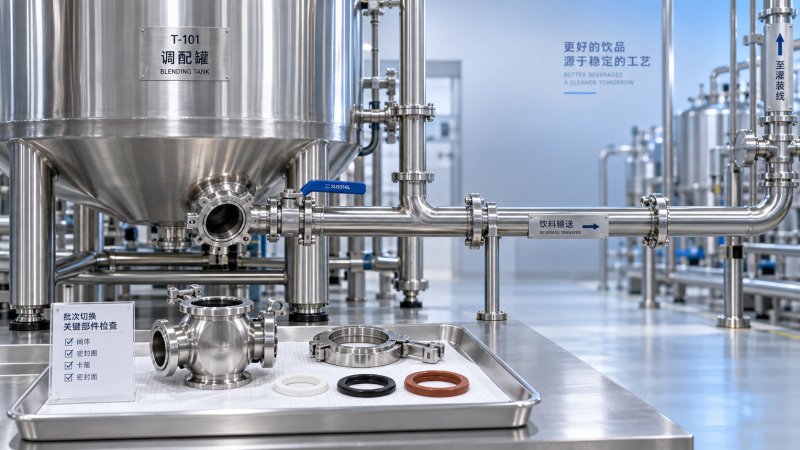
The timing of an off-flavor can help narrow the search. An aroma concentrated in the first transferred product suggests retained liquid near the outlet or transfer line. A flavor that appears after the next beverage has stood in the vessel may indicate release from seals or a remaining film. Treat these patterns as investigation clues, then check the suspected component.
Sequence batches around persistence and sensitivity
Producing mild flavors before strong ones can reduce difficult changeovers, but aroma intensity alone is an incomplete guide. A strongly scented, water-soluble ingredient may clean away more easily than a less obvious oil-based flavor. The next beverage's sensitivity matters too: lightly flavored soda exposes traces that a robust coffee drink might conceal.
Build a changeover matrix using both the outgoing product and the incoming product. Mark transitions involving persistent oils, botanical extracts, pulp, or delicate flavor profiles for additional inspection and verification. Group compatible products where production planning allows, while keeping required cleaning between batches.
For example, moving from a neutral beverage to a strongly flavored botanical drink may be easier from a sensory standpoint than reversing the order. Allergen controls, microbiological requirements, and product specifications still determine whether that sequence is acceptable.
If one ingredient repeatedly causes failures, dedicated hoses or compatible replacement seal sets may be more practical than repeatedly cleaning the entire system. Dedication needs to cover the components responsible for carryover; a dedicated tank offers limited benefit if it shares a contaminated pump.
Make the CIP cycle match the residue
Clean-in-place, or CIP, works when suitable chemistry reaches the soiled surface under effective cleaning conditions. Time, temperature, detergent concentration, and mechanical action work together. Increasing one cannot reliably compensate for a surface that the cleaning solution never reaches.
Recover and drain the previous product promptly. Allowing residue to dry makes removal harder, especially around the liquid line and fittings. Use a pre-rinse appropriate to the formulation to remove bulk product before detergent circulation. Excessively hot initial rinsing can make some protein-containing soils harder to remove, so the hottest available water is not automatically the best starting point.
For sugary and oily beverage residues, an appropriate alkaline detergent is often part of the cleaning program. Acid cleaning serves a different purpose, commonly addressing mineral deposits; it should not be treated as a universal remedy for aroma. Select chemistry around the soil, wetted materials, and seal compatibility, using the equipment and chemical suppliers' operating instructions.
Check actual circulation conditions rather than relying only on recipe settings. A heater setpoint does not establish the temperature at the return. Detergent dosing does not establish its effective concentration after dilution by retained water. Record the relevant measurements at the locations defined in the cleaning procedure.
Spray coverage deserves separate attention. Blocked spray-ball openings, inadequate supply pressure, or shadows behind internal fittings can leave residue while the tank wall looks spotless. A coverage test can reveal missed areas, although coverage alone does not prove soil removal. Hoses, valves, and pumps must also receive the flow needed for their validated cleaning method.
Where valve design requires seat cleaning or actuation during CIP, include the manufacturer's specified sequence. Components that cannot be cleaned reliably in place need a defined dismantling and cleaning procedure.
Respect differences between equipment materials
A facility producing spirits may use stainless steel blending vessels alongside copper distillation equipment. Shandong Weike Machinery Equipment Co., Ltd.'s 2000L vodka gin whiskey brandy distillery equipment, for example, includes a copper inner vessel, stainless steel heating layer, and CIP cleaning ball. Its mixed construction makes material compatibility relevant when planning cleaning across the production line.
Choose each cleaning recipe for the surfaces it actually contacts. A chemical program suitable for a stainless steel blending vessel may be unsuitable for exposed copper or particular seals. The presence of a CIP ball also needs to be supported by effective coverage, drainage, and a verified cleaning procedure.
Set a release check that can detect flavor residue
Visual cleanliness, sanitation, and flavor cleanliness answer different questions. Sanitizing a surface does not necessarily remove an oily film. An ATP result can support hygiene monitoring, but it does not establish that aroma compounds are absent. Allergen removal likewise requires its own verification where relevant.
Define release criteria for the difficult product transitions before production resumes. A practical check combines several types of evidence:
- Cleaning records: confirm that required conditions were achieved and all relevant branches were included.
- Targeted inspection: examine accessible residue traps and investigate persistent seal or hose odor.
- Rinse completion: use the procedure's specified checks, such as conductivity or pH against incoming-water conditions, to assess detergent removal.
- Flavor verification: assess an approved sample from the relevant product path, with ingredient-specific analysis where sensory checks lack sufficient sensitivity.
A water sample can help identify some carryover, but it may not reproduce how alcohol, acidity, or other ingredients draw flavor from a seal. For difficult transitions, quality-controlled assessment of the first product through the full transfer route can provide a more representative check. Hold that product pending release. Never taste cleaning rinses or samples that have not been cleared as safe for sensory assessment.
When another wash does not solve the problem
If cleaning records meet the procedure but flavor carryover persists, investigate component condition and system design. Replace damaged or persistently odor-retaining seals with materials compatible with the beverage and cleaning chemistry. Check hose condition, valve cavities, poor drainage, and branches that receive little flow.
Repeatedly extending CIP can increase downtime and chemical exposure without correcting trapped residue. Record the outgoing flavor, incoming product, affected sampling point, and corrective action after each failure. Use that information to target the source.
For the next difficult changeover, identify the most persistent ingredient in the outgoing batch and map every surface it touched. That gives the cleaning team a specific route to inspect and gives quality staff a clear basis for deciding whether the next beverage is ready for release.