












A sudden temperature spike in your fermentation tank does not always mean the cooling system needs a lower setpoint. First, confirm whether the reading is reliable.
Before making adjustments, operators should confirm the temperature reading, check probe placement, review fermentation activity, and inspect coolant flow through the jacket for possible restrictions.
Reacting too quickly can overcool the batch, stress yeast, or mask the real fault. The immediate priority is identifying what changed and protecting product quality.
Whether you produce beer, wine, cider, or other fermented beverages, these checks help distinguish fermentation heat from sensor or cooling issues before choosing your next step.
Is the Temperature Spike Real? Verify This First
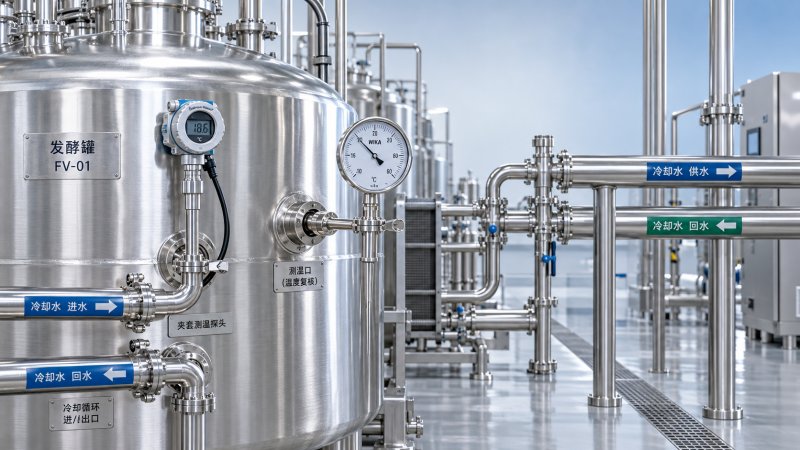
Check the trend rather than one displayed value. Note when the rise began, how quickly it developed, and whether cooling was requested during that period.
An abrupt jump followed by an immediate return often suggests a measurement problem. A sustained rise deserves investigation, especially when an independent reading confirms it.
Compare the installed sensor with a calibrated reference thermometer using an approved, sanitary measurement point. Account for different measuring locations before deciding the sensor is inaccurate.
Check that the controller uses the correct sensor type and temperature units. Incorrect scaling, recent configuration changes, or damaged wiring can create misleading temperature readings.
Keep product limits in view throughout the investigation. If a verified temperature approaches the batch’s established action limit, follow the site procedure and notify the responsible supervisor.
Could Probe Placement Explain the Reading?
A temperature probe measures its immediate surroundings. It may not represent the whole batch when liquid levels, jacket activity, or internal temperature gradients have changed.
Confirm that the probe or thermowell reaches the intended liquid zone at the current fill level. Partial batches can leave normally submerged measuring points exposed.
Inspect accessible connections for loose terminals, moisture, or cable damage. Electrical interference may also affect readings, particularly when jumps coincide with pumps or other equipment starting.
Where the sensor sits inside a thermowell, verify correct insertion and seating against the equipment instructions. Poor contact can delay its response to actual temperature changes.
Do not open a pressurized vessel or remove sanitary fittings during operation. Use designated access points and approved procedures to preserve operator safety and batch hygiene.
Is Fermentation Producing More Heat Than Usual?
Active fermentation releases heat, and that heat load changes over time. A healthy batch can temporarily challenge cooling capacity as yeast activity accelerates during fermentation.
Review the batch stage, starting gravity or sugar concentration, yeast strain, pitching conditions, and recent additions. Compare these details with previous batches using the same recipe.
Check gravity or another validated fermentation indicator alongside temperature. Airlock activity alone is unreliable because vessel pressure, leaks, and dissolved gas release affect visible bubbling.
If the rise coincides with strong fermentation activity and coolant delivery remains normal, increased biological heat is plausible. Confirm that the cooling system can handle this load.
Unexpected heating after normal activity has declined warrants broader investigation. Temperature alone cannot diagnose contamination; review sampling results and process records before reaching that conclusion.
When Cooling Is Requested, Is Coolant Actually Moving?
Start with the controller’s cooling indication, then verify the physical response. A displayed cooling demand does not prove that the valve opened or coolant circulated.
Check accessible valve positions, actuator status, pump operation, and any flow indicator. Confirm that isolation valves were restored correctly after cleaning, maintenance, or tank changeover.
Inspect for restricted strainers, kinked flexible hoses, blocked lines, or air trapped in the circuit. Follow the approved isolation procedure before opening or servicing components.
Measure coolant temperature at the jacket supply and return using suitable instruments. Interpret the difference together with flow, batch temperature, and the current cooling demand.
A large temperature difference may accompany low flow, while a small difference has several possible causes. Neither reading alone establishes whether jacket heat transfer is adequate.
For glycol circuits, verify concentration against the chiller specification. Excess concentration can increase viscosity and reduce circulation; insufficient concentration can create freezing risk under operating conditions.
Is the Problem in This Tank or the Shared Cooling System?
Compare neighboring tanks using the same cooling supply. If several temperatures rise together, investigate the shared chiller, reservoir, circulation pump, and distribution system before individual controllers.
Review whether another tank recently began cooling, a new batch was filled, or ambient conditions changed. Simultaneous demand can exceed capacity previously sufficient for routine operation.
Check chiller alarms, supply temperature, and recovery behavior against normal records. A warmer supply limits cooling effectiveness even when the fermentation tank valve operates correctly.
If only one vessel is affected, concentrate on its branch flow, valve, sensor, and jacket. Compare against a similar tank only when operating conditions are comparable.
Inspect accessible jacket connections for leaks or unusual behavior. Internal restrictions and heat transfer problems may require qualified maintenance rather than further changes to controller settings.
Which Adjustments Are Appropriate After the Checks?
Choose the response from the evidence. A confirmed sensor fault calls for measurement correction; a closed valve or restricted circuit calls for restoring coolant delivery.
Lowering the fermentation setpoint may provide little benefit when cooling is already continuously requested. In that situation, available flow, coolant temperature, or system capacity needs attention.
If measurements and cooling performance are sound, compare the actual batch temperature with the approved fermentation profile. Make any permitted correction gradually, within established process limits.
Avoid simultaneously changing the setpoint, coolant supply temperature, and controller tuning. Changing one factor at a time makes the batch response easier to interpret afterward.
After intervention, watch the temperature trend for the process-defined interval. Large batches respond slowly, and excessive cooling can cause an undershoot after fermentation heat declines.
Escalate persistent heating, unexplained alarms, leaks, or loss of circulation according to site procedures. Do not bypass protective controls to force continued operation during troubleshooting.
Keep Fermentation Cooling Separate from Distillation Specifications
Facilities producing fermented beverages and spirits may operate different thermal systems side by side. Each system needs checks based on its own duty and design.
For example, Weike’s 200L distillery equipment has a listed working volume of 200 liters and a design volume of 240 liters for tower distillation.
Its specifications describe jacketed electric heating and a condenser using normal-temperature tap water. That cooling arrangement serves vapor condensation during distillation, with different operating requirements.
The listed water demand of 0.2–0.4 tonnes per hour applies to that distillation equipment. It should not become a sizing target for fermentation jacket circulation.
When discussing equipment with Shandong Weike Machinery Equipment Co., Ltd., provide batch volume, fermentation profile, coolant conditions, and peak demand so vessel requirements can be assessed.
Record the Evidence Before Returning to Routine Operation
Record the peak temperature, duration above the process limit, independent measurement, fermentation stage, cooling demand, and confirmed fault. Include the intervention and resulting temperature trend.
These details help the quality team assess possible batch effects. They also reveal recurring problems, such as restricted branch flow or cooling shortages during simultaneous fermentations.
Before closing the incident, confirm stable temperature control, reliable measurement, normal coolant delivery, and appropriate alarm operation. Check the batch against your established quality requirements.
The practical rule is straightforward: verify the temperature, identify the heat source, and confirm heat removal. Adjust cooling only when those checks support the decision.